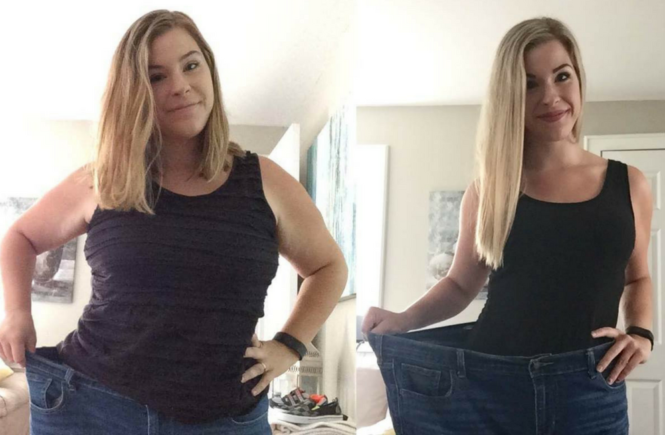
Meet Rachel, a 24-year old mom from Nova Scotia. At 5’5, she has lost over 90 pounds, but more importantly, she gained confidence and control over her health. After suffering with an eating disorder in her teens and ballooning up to 245 pounds while pregnant, she has finally let go of the all-or-nothing mindset. Now she focusses on living a balanced, healthy lifestyle, day by day. I am excited to share her weight loss journey because she didn’t just lose weight, she truly changed her life. (more…)
Category: Health
-
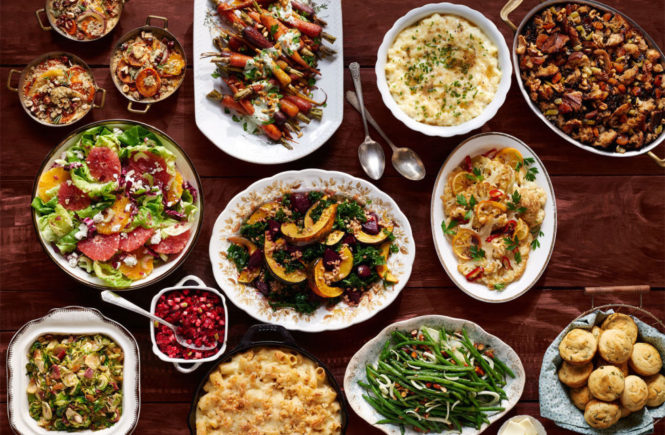
6 Tips to Avoid Overeating and Binge Eating at Thanksgiving Dinner
Thanksgiving dinner is for Overeaters like what New Years Eve is for Alcoholics. It’s the day when everyone overindulges and bingeing is viewed as normal. You don’t have to binge eat this holiday season, and here are 6 tips to help you prepare for a sane and enjoyable day.
- Start the day with a gratitude list. There is no better day than Thanksgiving to reflect on what you are truly thankful for. Perhaps you might write more long form in a journal. Meditate for a few minutes and remember all that you have to be grateful for. Try to keep this top of mind throughout the day.
- Eat a satisfying breakfast. Often times we think we should restrict our food intake in the days or meals leading up to Thanksgiving dinner in an attempt to “compensate” for the large meal to come, but this can lead to overeating and binge eating.
- Set loving boundaries or guidelines for your meal. For example, commit to eating one plate of food and no more. Pile it as high as you like with whatever you want. Setting a clear line around the amount can stop the urge to keep going back for more beyond the point of full ness. Be careful of trying to be too restrictive with certain types of foods as this can backfire.
- Eat slowly and mindfully. Chew your food thoroughly and make an effort to really savor every bite. Take a moment to consider how you are feeling going into the meal and check in with yourself throughout the meal. Are you hungry? Are you satisfied?
- Don’t overexercise in anticipation of the larger than normal meal. Exercise is known to increase hunger so it will likely result in you eating more calories than you would have otherwise. Stick to your regular routine and be kind to your body.
- Plan how you will spend your time in the evening. The feeling of being overly full can trigger a binge for many people and there will likely be an abundance of food remaining. Think of what you might do to occupy yourself instead.Try getting out of the house for a walk or going to a movie. If you enjoy shopping, some stores even open early for Black Friday sales.
-

What Are The Signs of Food Addiction?
If we are open, we can see signs everywhere. I don’t talk too much about the spiritual side of my journey, but it’s perhaps the most important. Being open to the universe and listening to that quiet voice within – that is where we find our truth.
The more I grow, the more I realize how little I know. I’m cool with that, it makes things interesting and reminds me not to get too complacent. There are, however, a few truths that are constant for me. When I’m feeling disconnected or lost, nature always brings me back.
Yesterday, I went hiking for the first time in a long time. It was hard. Harder than it should have been and even more humbling to see how far I’ve backslid. I’ve been struggling the last few months and my health and fitness have suffered. I can point my finger in so many directions as to why, but the why doesn’t really matter.
What matters is the truth. Whether I like it or not, I’m in the midst of a lifelong battle with obesity, food addiction, and binge eating. There is no room for complacency in this fight. There is no finish line.
I can wish with all my might for a “normal” relationship with food and maybe someday I’ll get there, but for today, that’s not my reality. If I could eat certain foods in moderation, I wouldn’t struggle with obesity. It’s really that simple.
Last summer I reached a breaking point and realized that it wasn’t just flour and sugar that triggered an addiction like responses in me, it was all starchy carbs – corn, potatoes, beans. I dove into the scientific research, taking a closer look at how our brains work with insulin response and metabolic resistance. I came to believe that I was addicted to carbohydrates and it was very clear to me that I had to eliminate these foods completely to find the freedom I was seeking.
So I googled “will i die if i don’t eat carbohydrates?” and came across the concept of ketosis. I wasn’t looking for another diet, I gave those up years ago. What I found was a community of people who were finally finding freedom from food, losing weight without starving themselves, and feeling hope after a lifetime of obesity. I’m grateful for those who embrace this lifestyle and show others that life goes on without bread.
I don’t promote keto as the solution because i don’t think it is. To me, keto is actually a byproduct of the solution – my diet falls under ketogenic/paleo/whole30 because of the foods I choose to eat/not eat. For most people, such a drastic shift is not feasible or sustainable as a starting point. It took me years of being honest about how the foods I eat affect me to reach this point and the process continues to this day.
Sure, I’d like to skip off into the horizon, forever cured of my issues with food, but that’s not reality. For today, I’m grateful that I am able to go for a hike and see this sign. A reminder to STOP before plummeting off the cliff and of all the wonderful things we might discover when we choose to turn around and take a new path.
-

What is Self Care Project? #selfcareproject
The days between Halloween and New Years tend to be a danger zone for those of us who struggle with food. It’s the time of year when tensions rise and even the most normal of eaters let their healthy habits slip.
I have been thinking about my own intentions and asking myself why I am able to easily maintain some habits while struggling with others. Research shows that people who are able to create healthy habits don’t have more discipline, they have more self-compassion. This means that the problem is not a lack of motivation, but a counterproductive mindset that undermines our efforts.
Yikes. I spent most of my life beating myself up, depriving myself, and hating my body. I know I am not alone in this. We live in a culture that emphasizes outward appearances over all else and rewards self-sacrifice. How then do we cultivate a mindset that leads us to self-compassion? The answer is self-care.
What is Self-Care?
We’ve all heard the term self-care, but what does it really mean and how can we put it into practice? At its core, self-care is any action you take to care for your health – be it physical, emotional, or spiritual. Unfortuantely, consistently practicing self-care is challenge for most of us, especially when food and body issues are involved.
As you might imagine, self-care encompasses a broad range of habits and behaviors. From the foods we eat to the ways we manage stress, we make hundreds of tiny decisions every day that affect our wellbeing. Most of us want to be healthier, but actually putting these habits into practice can feel overwhelming and complicated.
How to Practice Self-Care
First, we have to figure out which self-care habits to work on. Each of us has unique self-care challenges so it’s important to evaluate which habits we have mastered and where we want to fill the gaps.
If you struggle with your your weight, addressing practical habits around the food you eat and the way you move your body are a great place to start. If you have a tendency toward depression, focusing on regular grooming and social connection might be most beneficial.
Create a Self-Care Action Plan
Once you have chosen a few self-care activities to adopt into your daily routine, think about how and when you will incorporate these actions into your day. Write them down and commit to them. It may be helpful to set aside a specific time each day or schedule them in your calendar.
Accountability and Connection
Having support and accountability is a critical component in successful behavior change. As I was examining my own goals and creating a self-care action plan, I wanted to connect with more people who are also working toward the best version of themselves. I’ve started tagging my photos that show self-care practices using #SelfCareProject and I would love for you to do the same. I will be following that hashtag to keep up with everyone on instagram and I even have some fun prizes to award every week through the end of the year.
My goal is for this to be an ongoing series of blog posts highlighting different areas of self-care in more depth with strategies and examples. Is this something you would like to see? Please leave a comment and let me know if you have any specific questions or topics you would like me to write about.
-
Hello New Friends!
Welcome to my little corner of the web. I am thrilled for you to visit and I hope to connect with as many of you as possible. I am humbled by the messages I have received and I am grateful for the reminder that I am not alone on this journey. Obesity is hard and long term weight loss is even harder. I don’t pretend to have it all figured out, but I have learned a few things that work along the way. I had no idea that I would end up on the front page of Yahoo this morning, but I don’t think it’s a coincidence.
I am still unpacking a recent setback, trying to understand how and why I went from a loose size 12 to a tight size 14 over the course of a month. After much introspection and many heartfelt conversations, what resonates above all is being kind to myself. The first few weeks back from vacation, I was not. I felt desperate to lose weight (a feeling I know all too well) and I was angry at myself and my body. Motivation that comes from a place of fear never works, yet there I was.
As a culture, we have started talking more about self-care, but what does that really mean and how are we putting it into practice? How does this apply to weight loss, loving our bodies, and ultimately accepting ourselves? Self-care is at the very core of a healthy, happy life, yet so many of us spend our lives seeking a diet plan or training regimen as the solution.
I have been preparing to announce a new community initiative called the #SelfCareProject as a way to inform, support, and celebrate self-care habits. I’m not quite ready to share all of the details, but I would be remiss if I didn’t use this opportunity to invite you all to join me. The project will officially launch on Monday morning, so please sign up for my newsletter if you’re interested in learning more. It’s totally free and I promise it will be really fun.
Thank you again for being a part of my journey. We are stronger together than we are alone. You can also find me on Instagram, Pinterest, Facebook, and twitter.
-
October 2016
Hey friends! I’ve just returned from a month in Europe, where I wandered the streets of Paris (eating croissants), hiked 100 miles around Mont Blanc (eating fondue), and discovered Budapest (one delicious restaurant at a time). My belly and heart are overflowing.
I indulged often, enjoyed everything, and have no regrets. I definitely gained some weight and that’s OK – I know it’s temporary. You see, my progress has never been linear and what I learned far outweighs any setback that might show up on a scale.
-

Overcoming binge eating and compulsive overeating.
Disordered eating can range from mild to severe and from intermittent to constant, but its core characteristic is eating in response to something other than physical hunger. Like drugs and alcohol, food can be an escape from uncomfortable emotions. In particular, foods such as sugar, refined carbohydrates, and dairy are known to have properties which affect the reward centers of our brains. This also numbs our feelings, enabling us to go about our daily lives without ever acknowledging or addressing how we really feel. Crazy, right?
If you are like me and the idea of being an emotional eater, compulsive overeater, or binge eater resonates even a little bit, you’ve probably tried every diet in the book — twice. The problem is that diets don’t work, at least not in the longterm. This is why I and so many others have lost hundreds of pounds, only to regain them. Diets create an environment of emotional and physical deprivation, which inevitably results in binge eating.
-
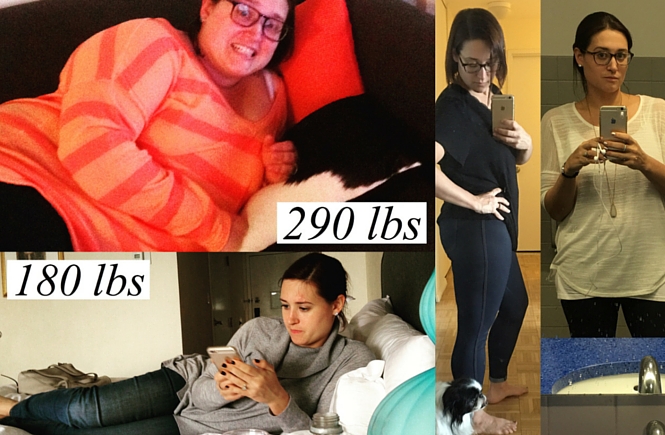
How Meredith changed her life and lost 105 pounds in under a year.
Meet Meredith, from @bear_gets_skinny. She has lost an impressive 105 pounds over the last year. At 29, she was pushing 300 and her doctor recommended bariatric surgery. Instead, she started making changes in her daily habits and transformed her life. After watching her reach the 100-pound milestone, I was inspired to learn more about her story. Graciously, Meredith openly answered my questions, sharing her history and hopes for the future. I hope you will enjoy getting to know her as much as I have.
-
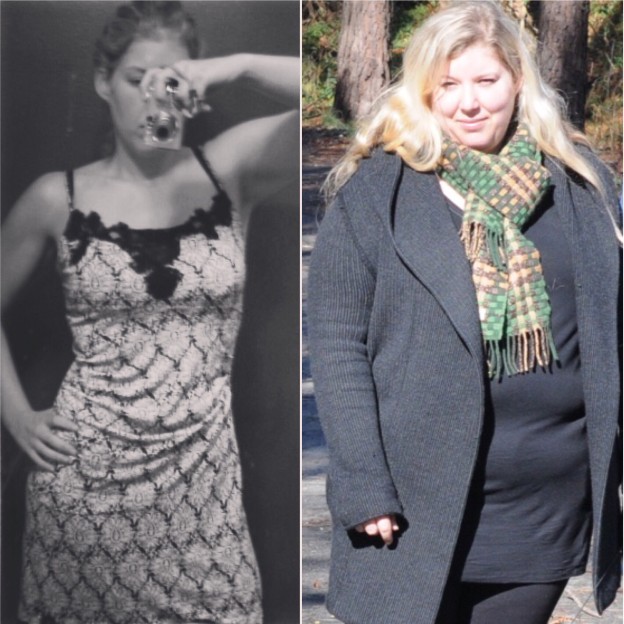
Throwback Thursday, Obesity Edition
The statistics are grim when it comes to weightloss. We all think we are different, that we are the exception. I know I did. I lost the weight through good ‘ole willpower – dieting and exercising, the traditional “eat less, move more” mantra of restriction and punishment. I wore a size 6 but I hated myself. Even though I was outwardly thin, I was mentally obese. I was miserable and ill equipped to deal with life. I needed food to cope with stress and anxiety and this fed my depression. I was hardly in that body for 30 seconds before I promptly started gaining the weight back – and then some. Ask anyone who’s ever found themselves in this position and they’ll tell you the same – they’re not quite sure how it happened. It’s insidious, obesity. Don’t take it lightly and don’t let your guard down.